
Feeding deer the right nutrition isn’t just a hobby; it’s a crucial factor that influences herd health, antler growth, and seasonal survival. Whether you’re a seasoned wildlife manager, a backyard enthusiast, or a conservationist looking to boost local populations, the choice of feed can mean the difference between thriving animals and costly setbacks. With countless blends on the market, it’s easy to feel overwhelmed by labels and ingredient lists. In this post we cut through the confusion, testing and comparing the top five deer feed products based on palatability, nutrient balance, and value. Keep reading to find the feed that will give your deer the edge they need.
5 Must-Have Deer Feeds Reviewed – Top Picks
We’ve tested countless options, and these five premium feeds consistently deliver the nutrition and palatability deer need for thriving health.
5. Pure Whitetail King Crunch Deer Feed 10lb

Pure Whitetail King Crunch is a 10‑lb bag of real, whole‑food deer feed that skips the highly processed pellets in favor of a natural blend of whole peanuts, roasted soy nuts, black sunflower seeds, and corn. The nutrient‑dense mix supports a healthy herd year‑round—whether you’re bolting it on the ground, filling a feeder, or sprinkling it near a stand or blind. Because the feed isn’t a hard block, you can apply exactly the amount you need, wherever you need it.
Beyond deer, the “Wildlife Mix” attracts squirrels, turkeys, chickens, songbirds, and other backyard visitors, turning a simple feeding spot into a lively gathering hub. It’s an excellent choice for game management, wildlife conservation, and hunters who want a reliable food source that also helps keep cameras stocked with activity.
Pros
- All‑natural, whole‑food ingredients provide essential nutrients without the additives found in many pellet feeds.
- Versatile application: pour directly on the ground, use in a feeder, or scatter near a stand—no special equipment required.
- Multi‑species appeal draws deer, turkeys, squirrels, and songbirds, creating a vibrant wildlife hotspot.
Cons
- Bulkier than pellet packs; the 10‑lb bag may be heavier to transport and store.
- No pre‑measured portions, so users must gauge the right amount for their specific site and season.
4. Armstrong Heritage Acres Deer Feed, 40 lbs
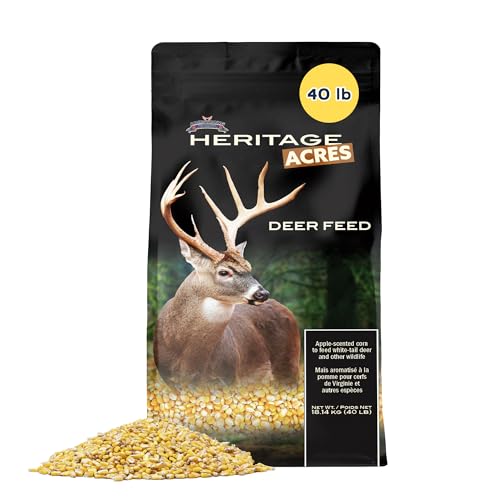
A 40‑lb sack of Armstrong Bird Food Heritage Acres Deer Feed gives landowners and wildlife enthusiasts a reliable, long‑lasting source of nutrition for deer and other game. The simple formula blends whole corn with natural apple flavor—no fillers, artificial additives, or preservatives—so the feed stays pure and fresh. The sweet apple aroma drifts across the field, drawing white‑tailed deer and curious critters from a distance, while the sturdy bag makes frequent top‑offs easy. Whether you scatter the corn on the ground, load it into a platform feeder, or fill an automatic deer feeder, set‑up is quick and mess‑free. Store the bag in a cool, dry place to preserve the natural scent and keep the feed at peak quality throughout the season.
Pros
- Large 40 lb bag – minimizes trips to the store and supports continuous feeding for active deer populations.
- All‑natural formula – whole corn and real apple flavor provide a wholesome snack without chemicals.
- Strong apple scent – naturally attracts deer and other wildlife, encouraging regular visits to your feeding area.
Cons
- Bulk size – the 40‑lb bag may be cumbersome for those with limited storage space.
- Limited to deer & game – not ideal if you’re looking for a multi‑species feed that includes birds or small mammals.
3. Antler King Grainiac Block for Deer
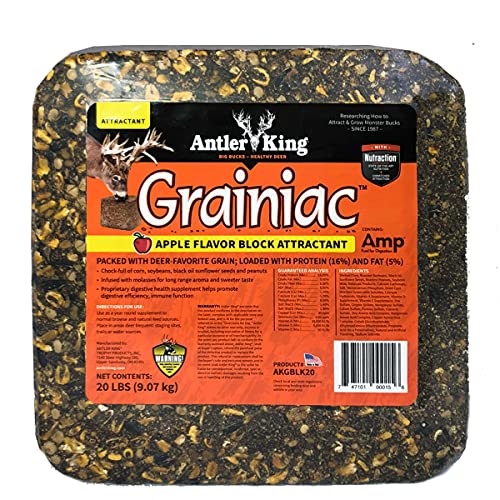
Antler King’s Apple‑Flavored Grainiac Block is a 20‑lb, year‑round feed supplement designed to turn any staging area into a deer magnet. Each bite is packed with the species’ favorite grains—corn, soybeans, black‑oil sunflower seeds, and peanuts—plus a touch of molasses that creates a long‑range aroma and a sweet, irresistible taste. The block delivers 16 % protein and 5 % fat, giving bucks the extra nutrition they need for antler growth and overall health. Because it’s a solid block, it’s easy to place on trails, water sources, or any high‑traffic spot without worrying about spillage or wind loss. The apple flavor adds a seasonal twist that keeps deer coming back, while the robust nutrient profile supports natural browse and other feed sources throughout the year.
Key Features
– 20‑lb solid block, ideal for strategic placement
– 16 % protein, 5 % fat for balanced nutrition
– Apple flavor with molasses‑infused corn, soy, sunflower seeds, peanuts
– Long‑range aroma for maximum draw
– Year‑round use in any habitat
Pros
- High nutritional value – protein and fat levels promote healthier antlers and body condition.
- Irresistible scent and taste – molasses and apple flavor create a strong, lasting draw that keeps deer returning.
- Easy, mess‑free application – solid block format resists wind and rain, reducing waste and placement effort.
Cons
- Fixed block size – may be less flexible for very small or highly targeted feeding sites.
- Potential for over‑attraction – in high‑traffic areas, the strong aroma could also draw non‑target wildlife or predators.
2. Grip Feed Grip ‘N Go 8 lbs

Deer Attractant | Antler Growth Booster blends premium peanuts, roasted soybeans, and whole corn into a single, high‑performance feed that delivers a mouth‑watering scent, irresistible texture, and balanced nutrition. Each 8‑lb bag of Grip ‘N Go supplies 13 % protein and 9.5 % fat, fueling rapid antler development and maintaining body condition throughout the year. The formulation is engineered for powerful attraction during velvet growth, the rut, and every season in between, making it a versatile choice for ground pours, feeder stations, or trail‑cam baiting. Its quiet, portable bag with a built‑in handle lets walk‑in hunters and pressured‑land setups move and deploy the feed discreetly. Beyond hunting, wildlife enthusiasts can use it to support backyard feeders and enhance trail‑cam activity, promoting a healthier ecosystem while keeping deer coming back.
Pros
- High‑protein, high‑fat nutrition accelerates antler growth and improves deer condition.
- Irresistible scent and texture created by the peanut‑soy‑corn blend ensures consistent deer return.
- Portable, quiet bag with a sturdy handle for easy, discreet transport and deployment.
Cons
- The 8‑lb bag may be bulkier for hunters who prefer ultra‑lightweight, single‑use packets.
- Requires proper storage to keep the feed fresh in humid climates; moisture can affect texture and scent.
1. WILDGAME INNOVATIONS Apple Crushed 5lb Deer Attractant

Deer are instinctively drawn to the sweet, familiar scent of a ripe apple, but locating fresh fruit in the wild is a challenge for any hunter. Wildgame Innovations solves that problem with Apple Crushed, a 5‑lb, ready‑to‑use attractant that packs the authentic aroma and flavor of real orchard apples into a nutrient‑rich feed. Each batch is made from all‑natural, freshly harvested apples that are crushed and blended with a precise mix of proteins and fats, delivering 12.5 % fat and 17 % protein to keep deer healthy while they linger around your stand.
The formula’s airborne extreme scent dispersion technology releases up to 600 % more scent molecules than standard feeds, sending a powerful apple plume across the landscape at “supersonic” speed. Whether you’re tracking game, managing herd movement, or pairing it with trail cameras, this attractant works straight out of the bag—no mixing or prepping required.
Pros
- Authentic apple aroma that triggers a natural feeding response, drawing deer from long distances.
- High protein and fat content supports deer health, encouraging repeated visits and larger trophy bucks.
- Airborne extreme scent dispersion offers superior scent reach compared with ordinary feeds, improving visibility and effectiveness in diverse hunting scenarios.
Cons
- The strong apple scent may also attract non‑target wildlife (e.g., squirrels or raccoons).
- Requires careful placement to avoid over‑saturation, which can diminish the scent’s long‑range impact.
Buying Guide
Choosing the right feed for deer is crucial for their health, growth, and the overall success of your wildlife management program. Look for products that balance nutrition, palatability, and safety while fitting your budget and local regulations.
- Nutritional composition – Opt for a formula that provides the right mix of protein, energy, vitamins, and minerals for the specific life stage and seasonal needs of your herd.
- Ingredient quality – Prioritize feeds made from high‑quality, non‑contaminated grains, legumes, and natural additives; avoid artificial fillers and excessive by‑products.
- Palatability and delivery – Choose a feed that deer readily accept, whether in pellet, mash, or block form, and that can be easily dispensed in your feeding setup.
- Value and cost‑effectiveness – Compare price per pound of usable nutrients, and consider bulk purchasing or seasonal discounts that lower long‑term expenses.
- Manufacturer reputation and reviews – Research the brand’s track record, read user feedback, and verify any third‑party certifications for safety and performance.
By evaluating these factors, you can select a deer feed that promotes robust health, maximizes return on investment, and aligns with your management goals.
Frequently Asked Questions
What types of natural forage provide the best nutrition for deer?
- Browse: Leaves, twigs, and buds from trees such as oak, maple, and willow are rich in protein and minerals.
- Grasses & Legumes: Early‑season grasses and legume plants (e.g., clover, alfalfa) supply essential amino acids and energy.
- Forbs & Herbs: Plants like dandelion, plantain, and chicory add vitamins A, C, and E, plus antioxidants that support immune health.
Mixing these natural sources mimics a deer’s natural diet and promotes optimal growth and antler development.
How should supplemental feed be formulated for deer in winter?
- High‑energy concentrate: Use a blend of cracked corn, barley, or oats to supply the calories deer need when natural forage is scarce.
- Protein boost: Add soybean meal, canola meal, or dried whey to reach 12‑14 % crude protein.
- Mineral & vitamin block: Provide a free‑choice mineral supplement containing calcium, phosphorus, magnesium, and trace minerals (zinc, copper, selenium).
- Limit salt: Offer a separate salt lick; excess salt can reduce water intake.
Feed in small, frequent portions (e.g., 1–2 lb per animal per day) to prevent spoilage and reduce waste.
Are there any foods that should be avoided when feeding deer?
- Highly processed grains: Products with added sugars, preservatives, or artificial flavors can upset rumen microbes.
- Toxic plants: Avoid nightshade family members (e.g., potatoes, tomatoes) and any plants known to contain alkaloids or cyanogenic glycosides.
- Moldy or spoiled feed: Mycotoxins from mold can cause liver damage and suppress the immune system.
- Excessive fruit or sweet treats: While deer love apples or berries, over‑reliance can lead to digestive upset and weight gain.
Sticking to clean, natural, and balanced feed ensures the herd stays healthy and thriving.
Conclusion
Choosing the right feed for deer hinges on balancing nutrition, palatability, and seasonal needs, while also respecting the animals’ natural foraging instincts. High‑quality protein sources, energy‑dense carbohydrates, and essential minerals together support robust antler growth, healthy immune function, and overall vitality. Tailoring the diet to the specific life stage—whether fawn, yearling, or mature buck—ensures that each animal receives the nutrients it requires at critical moments. By monitoring herd condition, adjusting rations with the changing climate, and integrating supplemental feeds responsibly, producers can promote sustainable growth, improve reproductive success, and maintain the long‑term health of their deer populations.