
Living with a blind dog means rethinking everyday play, because the right toys can turn uncertainty into confidence, stimulate senses, and keep your companion physically active and mentally sharp. When a pup can’t rely on sight, textures, sounds, and scents become essential cues that encourage exploration without fear. That’s why picking toys designed specifically for blind dogs isn’t just a nice extra—it’s a crucial part of their wellbeing and your peace of mind. In this guide we’ve tested dozens of options and narrowed the field to the five standout products that combine safety, durability, and sensory appeal. Read on to discover which toys will brighten your blind dog’s world.
5 Must-Have Toys for Blind Dogs – Top Picks Reviewed
We’ve tested each option to ensure they stimulate senses, encourage play, and stand up to the energetic needs of blind companions.
5. SCHITEC Dog Ball 4 Pack

The SCHITEC Dog Balls with Bell Sound are a playful, eye‑catching set of four 2‑inch rubber fetch balls designed especially for puppies and small breeds. Each ball houses a tiny bell that jingles with every bounce, instantly drawing a dog’s attention and sparking curiosity. The pleasant sound also doubles as a locator for blind or senior dogs, helping them track the toy during indoor or outdoor play.
The hollow interior, punctuated with round surface holes, makes the balls easy to pick up, carry, and toss. Crafted from soft, bouncy rubber, they provide a gentle chew that’s kind to teeth and gums, while the double‑layer construction adds extra toughness for average chewers. Vibrant colors and a beef scent make the set irresistible, and the compact size is perfect for Yorkies, Chihuahuas, Pugs, Shih Tzus, Mini Schnauzers, Dachshunds, and even curious cats.
Pros
- Jingle bell inside – attracts attention, aids navigation for blind/older dogs.
- Hollow, hole‑patterned design – easy to grab, ideal for fetch games.
- Soft yet durable rubber – gentle on teeth, bite‑resistant for moderate chewers.
Cons
- May be too small for medium or large dogs, limiting use to tiny breeds.
- The bell sound could be slightly loud for very sensitive dogs or indoor environments.
4. Playology Plush Squirrel Dog Toy

Meet the plush squirrel that turns every play session into a nose‑twitching adventure. This small, soft stuffed animal squeaks on demand and releases an all‑natural peanut‑butter aroma that dogs find irresistible. Designed for pups up to 25 lb, it’s perfect for gentle chewing, interactive squeak‑play, or cozy snuggles after a long walk.
Playology’s Encapsiscent™ technology embeds the scent at a microscopic level, so every bite releases a fresh burst of aroma—keeping dogs engaged up to 7× longer than unscented toys. The scent is locked into the material, meaning a quick machine wash won’t wash it away; simply tumble‑dry on low heat for a clean, fresh toy.
Safety is built in: each toy meets ASTM and CPSIA standards for lead, phthalate, and toxin limits, reflecting Playology’s dog‑lover‑driven design philosophy. And with the Happiness Guarantee, you’re covered if your furry friend isn’t wag‑worthy thrilled.
Pros
- Dual sensory fun: squeak + long‑lasting peanut‑butter scent keeps dogs mentally and physically stimulated.
- Easy to maintain: machine‑washable without losing scent, preventing grit buildup that can damage teeth.
- Safety‑first construction: ASTM & CPSIA‑compliant, non‑toxic materials give peace of mind.
Cons
- Size is limited to small breeds (up to 25 lb); larger dogs may outgrow it quickly.
- Scent intensity may vary for dogs with a weaker sense of smell, potentially reducing engagement.
3. Wobble Wag Giggle Ball

The Wobble Wag Giggle Ball turns ordinary playtime into a giggly, curiosity‑driven adventure. Inside the 5.5″ × 5.5″ × 5.5″ ball are specially designed tubes that emit a cheerful giggle whenever the ball rolls, bounces, or is shaken. The sound triggers a natural “play‑with‑me” response, keeping dogs of any size—large, medium, or small—engaged for minutes on end. Its four clutch pockets give pups an easy grip for tossing, chasing, or carrying, making it perfect for indoor living rooms, backyard yards, or park outings. Crafted from durable, pet‑safe material, the ball is built to withstand enthusiastic chewing and rough rolling, while supervised sessions let owners reward each giggle with treats or praise, reinforcing positive behavior and deepening the bond.
Pros
- Interactive sound feedback sparks curiosity and encourages repeated play.
- Versatile size & grip pockets suit puppies to senior dogs and work well on any surface.
- Durable, pet‑safe construction ensures long‑lasting fun with minimal wear.
Cons
- The giggle sound may be too loud for very noise‑sensitive dogs or small living spaces.
- Requires occasional supervision to prevent excessive chewing on the outer shell.
2. AWOOF Pet Snuffle Mat
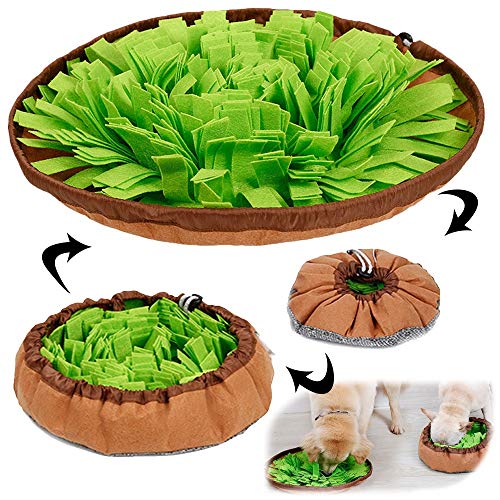
The AWOOF Pet Snuffle Mat turns mealtime into a fun, brain‑boosting game for both dogs and cats. Crafted from soft, environmentally‑friendly felt, the mat hides treats, kibble, or tiny toys in its maze‑like folds, encouraging natural foraging instincts while burning excess energy and supporting weight management. The bottom features a non‑slip cloth that stays firmly in place on hardwood, tile, or carpet, and the compact design folds into a handy travel bag or can be hung when not in use—perfect for road trips, camping, or quick indoor play. A clever dual‑use function lets you fold the mat into a shallow bowl for regular feeding, so you can reinforce good habits without adding extra gear. Cleanup is a breeze: simply hand‑wash the felt surface and let it air dry. Plus, AWOOF backs the product with a satisfaction guarantee, so you can buy with confidence.
Pros
- Mental stimulation & weight control: Hidden treats keep pets engaged, reducing boredom‑related chewing and helping burn calories.
- Portable & non‑slip: Secure bottom prevents sliding; folds into a small bag for travel or easy storage.
- Dual‑use feeding bowl: Switch from snuffle game to regular bowl in seconds, saving space and reinforcing routine.
Cons
- Hand‑wash only: Requires manual cleaning, which may be less convenient than machine‑washable mats.
- Felt can trap debris: Small particles may linger in the fabric if not emptied regularly.
1. SPOT Sensory Ball

The SPOT Sensory Ball is a 2.5‑inch, high‑contrast rubber toy that turns every play session into a multi‑sensory adventure. A soft bell rings with each bounce, while the bright colors catch the eye from across the yard. Inside the ball is a beef‑scented core that releases a savory aroma and flavor, and the surface is dotted with raised nubs that gently massage gums and scrape plaque as your dog chews. Made from durable, non‑toxic TPR rubber, the ball is lightweight, buoyant, and perfect for indoor fetch or a splash in the pool. It’s sized just right for small breeds, yet sturdy enough for enthusiastic play—just avoid giving it to aggressive chewers.
Pros
- All‑five‑sense stimulation – sound, sight, smell, taste, and texture keep dogs engaged longer.
- Oral‑health boost – raised nubs clean teeth and massage gums while playing.
- Safety‑first material – non‑toxic, BPA‑free rubber gives peace of mind for all ages.
Cons
- Not suitable for very aggressive chewers; may wear down faster under heavy bite pressure.
- Scent may fade after extended outdoor use, requiring occasional re‑flavoring.
Buying Guide
When choosing toys for a blind dog, prioritize sensory stimulation, safety, and engagement, because they rely on touch, sound, and smell rather than sight.
- Material safety and texture: Choose non‑toxic, soft‑yet‑firm fabrics or rubber that provide distinct textures for your dog to explore without risking gum or mouth injuries.
- Auditory and scent features: Toys that squeak, crinkle, or are infused with dog‑safe scents encourage play by appealing to hearing and smell, the primary senses of a blind pet.
- Durability and size: Opt for toys built to withstand strong chewing and appropriate for your dog’s breed size, ensuring they won’t break into hazardous pieces.
- Ease of cleaning and value: Select toys that are machine‑washable or easy to wipe down and offer a reasonable price‑to‑quality ratio, so you can replace them as needed.
By focusing on safe textures, engaging sounds or scents, lasting construction, and practical value, you’ll provide toys that keep a blind dog active, confident, and happy.
Frequently Asked Questions
What kinds of toys are safest and most stimulating for a blind dog?
- Textured toys – rubber, rope, or plush toys with raised nubs or ridges give tactile feedback.
- Scented toys – toys infused with dog‑safe scents (e.g., bacon, peanut butter) encourage play through smell.
- Noisy toys – squeakers, crinkly material, or toys that rattle help locate the toy by sound.
- Durable, non‑sharp toys – avoid anything that could break into small pieces; choose sturdy, chew‑resistant options.
How do I pick the right size and material for my blind dog’s toy?
- Size: The toy should be large enough that it can’t be swallowed whole but small enough for the dog to carry in its mouth. A good rule of thumb is a toy that fits comfortably between the dog’s paws.
- Material: Opt for non‑toxic, chew‑resistant materials like natural rubber, thick rope, or reinforced plush. Avoid hard plastics that can splinter and cause injuries.
- Weight: Slightly heavier toys stay on the floor and are easier for a blind dog to feel and retrieve.
Are there any specific brands or products that work well for blind dogs?
- KONG Classic – Made of durable rubber, it can be stuffed with treats for scent and taste enrichment and makes a muffled thump when tossed.
- Zogoflex Tux – A chew‑proof, rubber toy with a squeaker that produces a low‑pitch sound, ideal for dogs with hearing sensitivities.
- Petstages Snuggle Pup – Plush with a hidden squeaker and a crinkly outer layer, providing both scent and sound cues.
- BarkBox “Scented Rope” – Rope toy infused with natural dog‑safe aromas; the texture and smell make it easy for a blind dog to locate and grip.
When introducing any new toy, supervise the first few play sessions to ensure the dog can handle it safely and enjoys the sensory cues.
Conclusion
Choosing toys that engage a blind dog’s remaining senses can transform playtime into a source of confidence, mental stimulation, and deep bonding. Prioritize textures that invite chewing, sounds that spark curiosity, and scents that guide exploration, while ensuring durability and safety. Rotate toys regularly to keep interest alive, and observe your dog’s reactions to fine‑tune the selection. By focusing on sensory enrichment and interactive play, you’ll support your dog’s navigation skills, reduce anxiety, and foster a joyful, active lifestyle—proving that a little thoughtful creativity can make every moment of play both meaningful and fun.